
A 92-Year-Old Rower's Lessons on Aging
Richard Morgan didn't start rowing until 73. At 92 he was a four-time world champion with the lab results of a young adult. What his file reveals about ageing, adaptation, and the week worth copying.
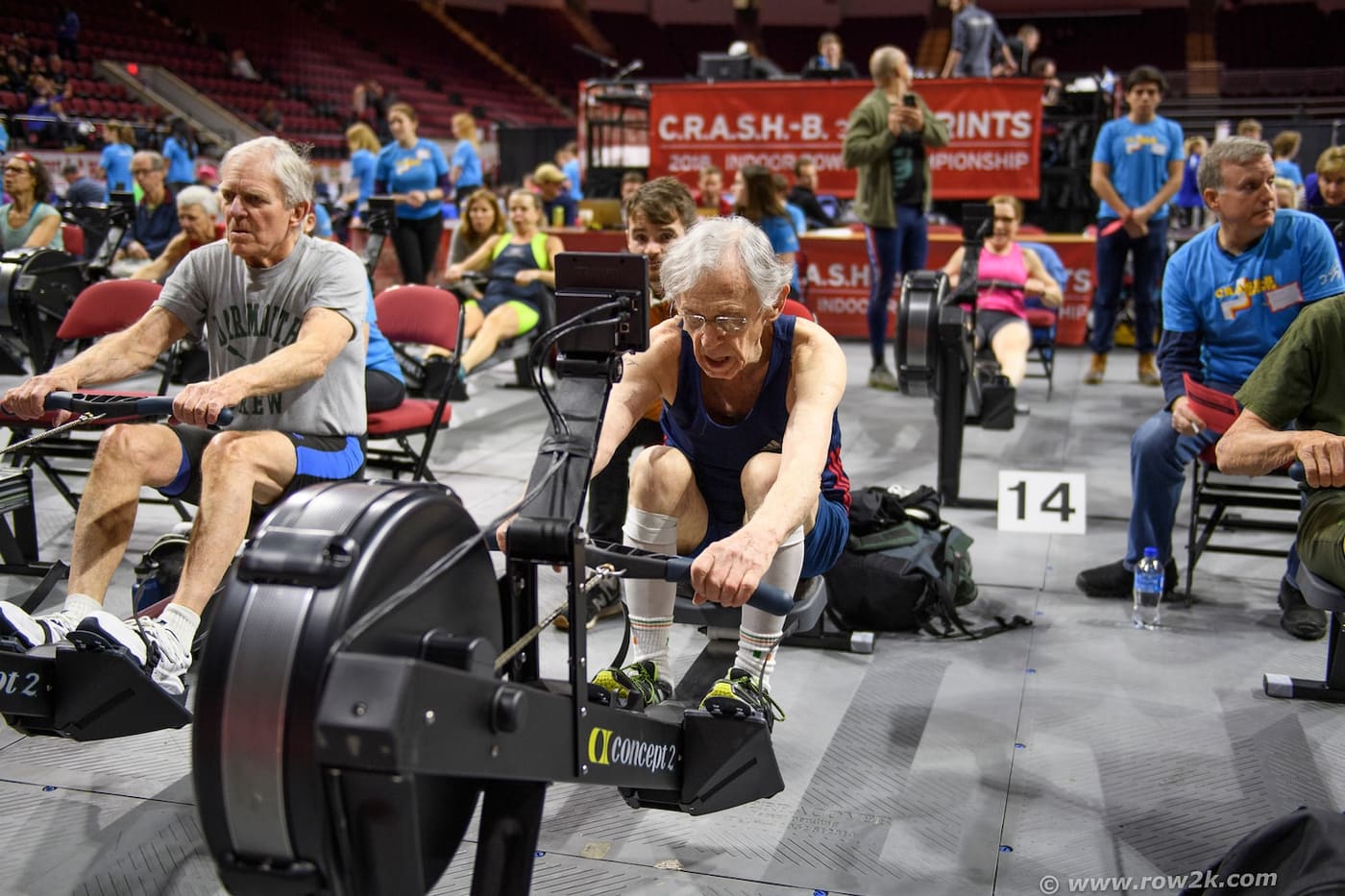
At some point, without ever deciding to, you started describing your fitness in the past tense. What you used to lift. How far you used to run. The comeback keeps sliding to next month, because part of you suspects the machinery is winding down and there’s not much to be done about it.
Richard Morgan is the counter-evidence. He is a 92-year-old, four-time indoor rowing world champion. For a published study in the Journal of Applied Physiology, physiologists put him through a 2,000 metre trial on the erg. His oxygen uptake kinetics, heart rate response and body composition came back looking like those of a healthy young adult. He didn’t take up training until he was 73. This is what his file actually shows about ageing and adaptation on an indoor rower, and what’s worth copying from it this week.
What the lab actually found
The trial measured a body that had kept adapting. His peak heart rate reached 153 beats per minute at maximal effort. His top power was 220 watts, with an anaerobic reserve of 140 watts still in the tank. He carried 47.7 kilograms of muscle against 9.1 kilograms of fat, which works out to 15.4 per cent body fat, and his lungs held a forced vital capacity of 3.36 litres. Strip the units away and the picture is simple. These are the readings of a fit adult in the middle of life, not a man in his tenth decade.
Nothing in the data read as decay. A body that keeps being asked keeps answering.
So your next row doesn’t need to prove anything. Note your average watts and write them down. That number isn’t a verdict on your age. It’s a baseline, and baselines move.
The week that built it
Here’s the part that should be famous: the routine is almost boring. Morgan rows about 30 kilometres a week. Roughly 70 per cent of it is light, at an effort where you could still hold a conversation. Twenty per cent is hard. Only ten per cent goes anywhere near maximal. Twice a week he lifts: three sets each of lunges, rows and curls, taken close to failure. He eats to support it, with protein at 2.3 grams per kilogram of lean mass and calories to match the demand: 33.4 kcal per kilogram of lean mass, the intake of a body that expects to work.
Compounding works the same way in training as it does in money. The single deposit is unremarkable. Decades of unremarkable deposits are the fortune. Morgan’s file isn’t the product of a secret protocol. It’s the product of ordinary weeks, repeated.
Copy the shape before you copy the volume. Make roughly seven of every ten sessions genuinely easy. Save the hard rows for when they’re planned. Then repeat the week, because the repeat is the ingredient.
He started at 73
Morgan wasn’t an athlete for most of his life. He walked into his first rowing class at 73, alongside his grandson. Nineteen years later, physiologists were writing papers about him.
That grandson, Lorcan Daly, is now a sports scientist who recommends rowing for older adults. It’s low impact. It works the whole body, building strength and endurance in the same session. And through competition and community it carries the two things training plans usually forget: connection and purpose.
The fear underneath every comeback is that the window has closed. Morgan’s whole story is the window not closing. If you’re starting again after years away, the first stroke is the whole test. Sit, strap in, push, see your number. Everything after that is just the next session.
Next time you catch yourself describing your fitness in the past tense, remember the man in the lab whose every number reads present. The distance between the two isn’t talent, and it isn’t youth. It’s a week with three honest sessions in it, repeated for as long as you like. If you’d like that week structured for you, Foundations & Flow in the Row Nation app was built for adults finding their way back.

Keep reading
More insights
AIRO26
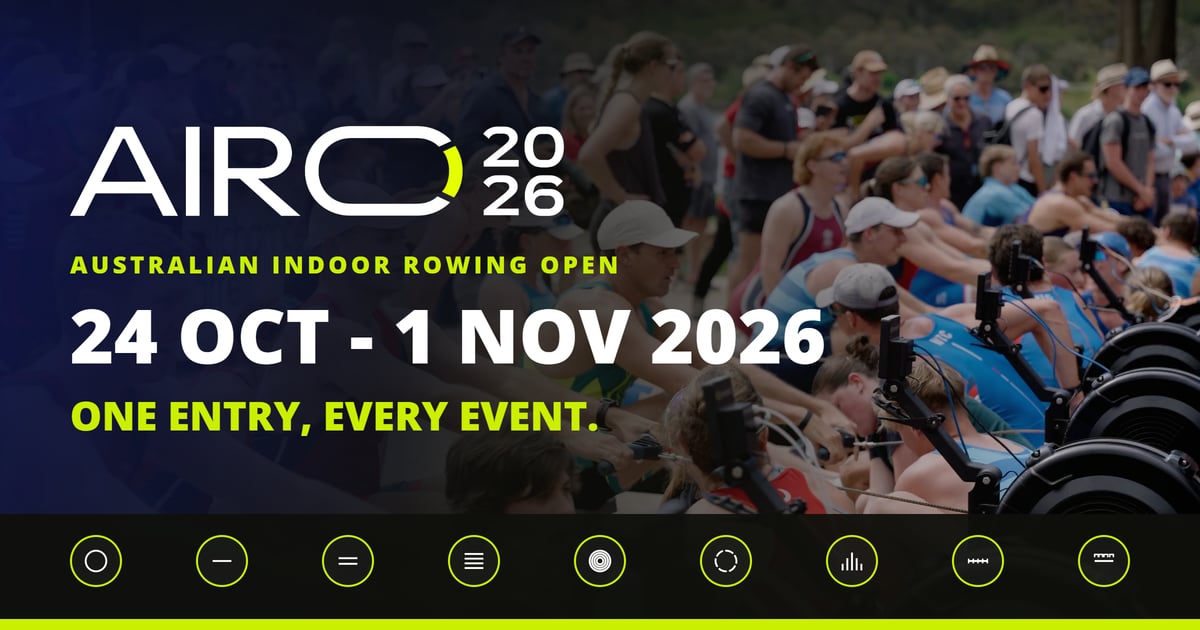
AIRO26: Entries Open
AIRO26 runs 24 October to 1 November 2026. Race your piece, build your team and climb the national leaderboard.
22 Oct 2026
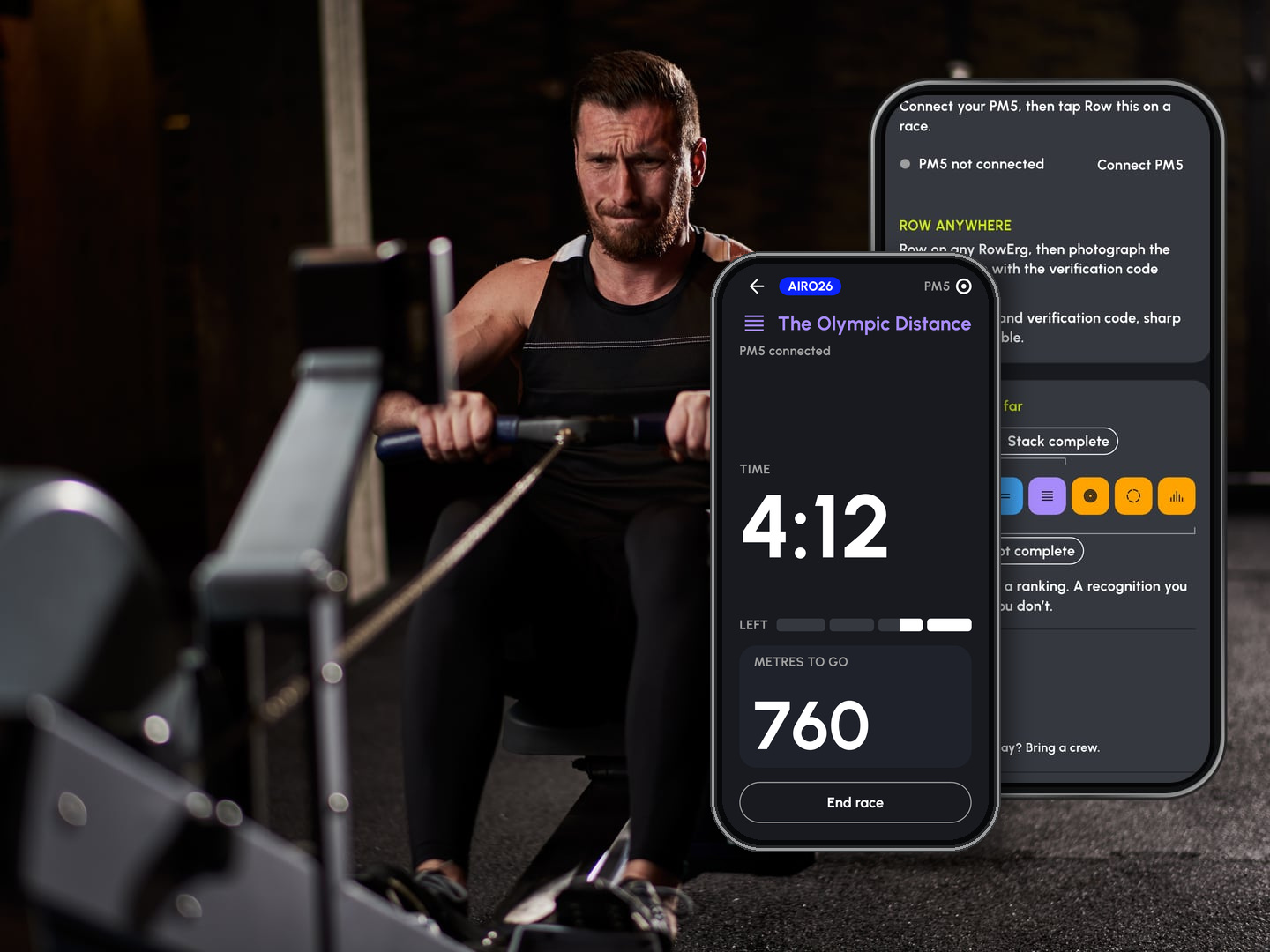
AIRO26: update your app and get ready for 24 October
Get ready for AIRO26 on Saturday 24 October: update the Row Nation app, then read the rules before your first event row.
12 Oct 2026
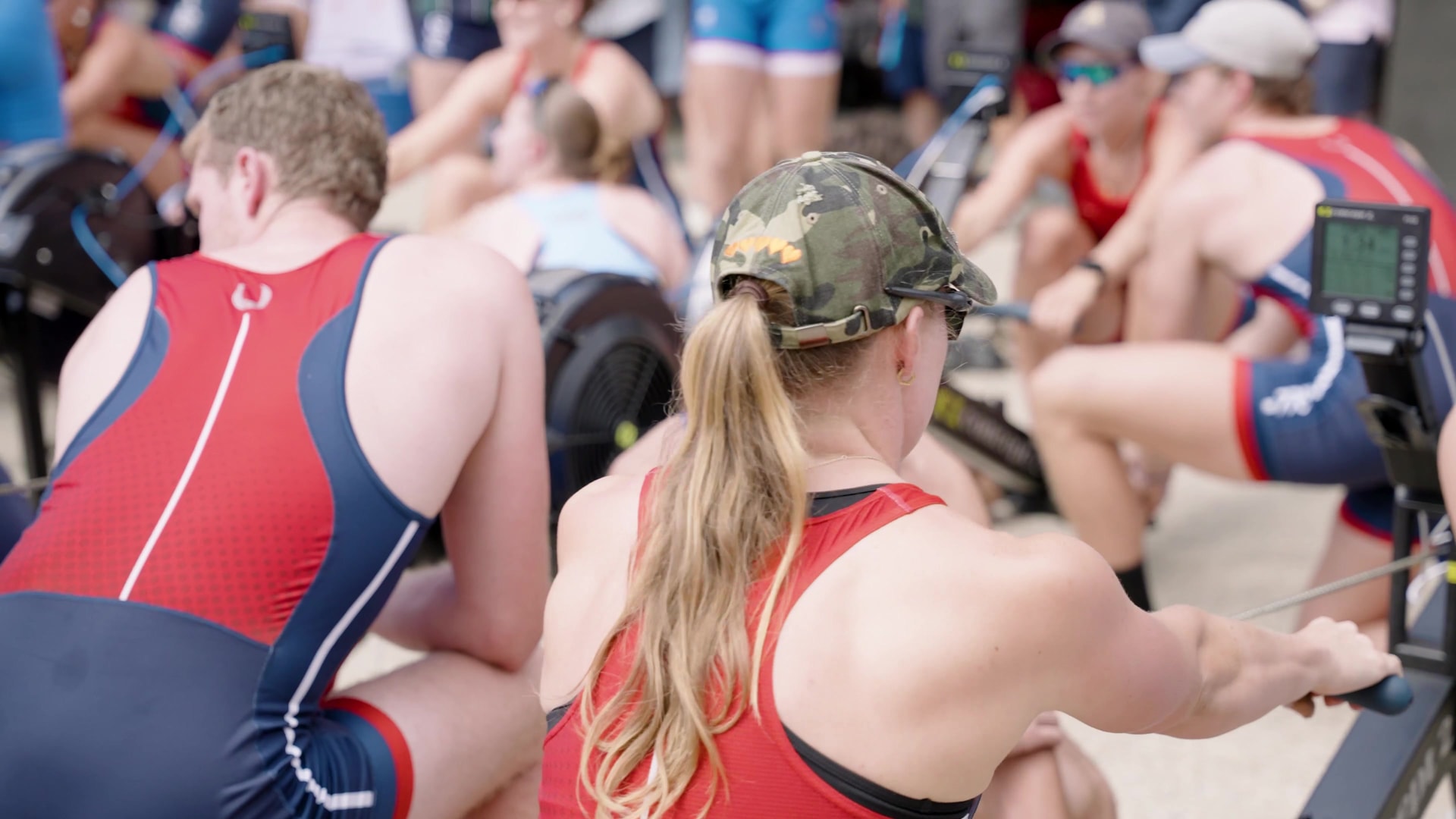
Nominate your students for the Golden Oar 4x500m RowErg Relay
Every team has one school boy and one school girl, racing 4 x 500 m with Rowing Australia athletes on Saturday 31 October. Nominations close Monday 26 October.