
How Guide Watts Zones Power Premium Programmes
Turn a short 2 or 4-minute test into clear watt targets and stroke-rate caps with the Guide Watts Calculator. Pacing made simple.
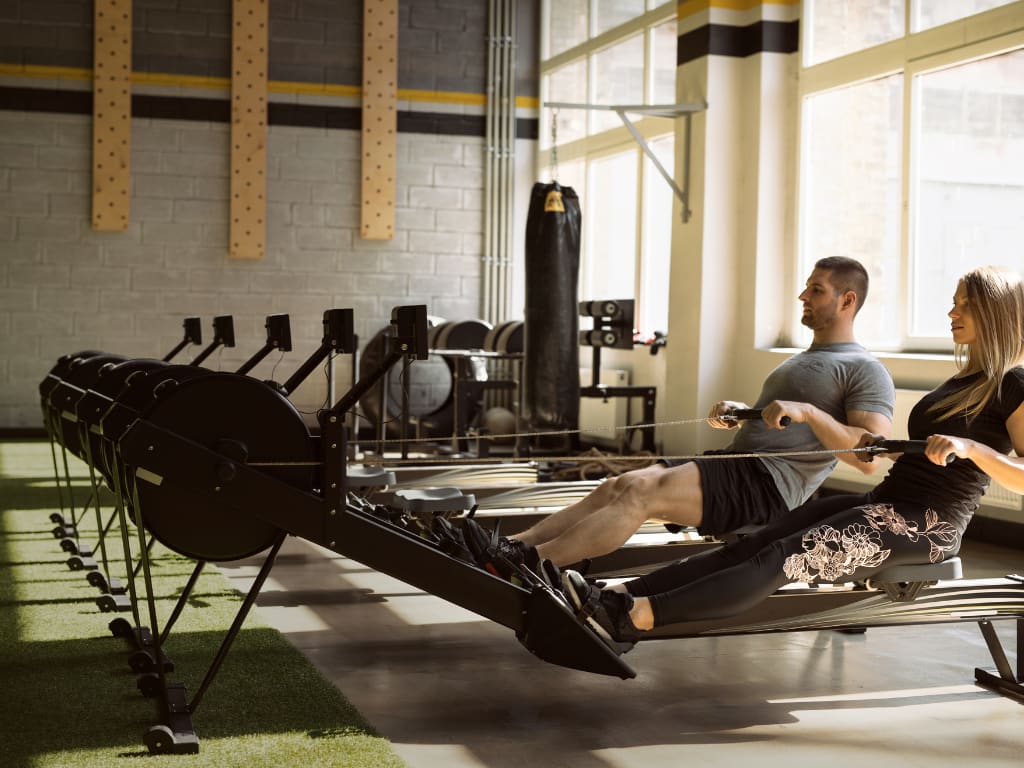
When most people sit on a rowing machine, they either guess a pace, chase the split on screen, or just row until it feels hard enough. That works for a while. Then progress stalls, some days feel strangely easy, and others feel impossible.
Row Nation’s Guide Watts system is designed to solve that problem.
Instead of guessing, you run one short test, set your Guide Watts zones, and use those zones to set your target watts and stroke rate across every workout. The Guide Watts Calculator does the hard maths. Your job is to show up, row to the plan, and notice how it feels.
This guide explains how the Guide Watts system works, how to do the test, and how our premium programmes use the zones to scale to any fitness level.
Why we use Guide Watts zones
Watts measure how much power you are putting into the flywheel. That makes watts a direct view of work done, not just how fast the virtual boat would move.
Using watts with clear zones gives you three key advantages:
- Consistency across days 140 watts on Monday is the same as 140 watts on Thursday. You are no longer guessing what moderate or hard should feel like from session to session.
- Personal targets at your current level Your zones are built from your own test result. A beginner and a former athlete can follow the same programme structure, but the watt targets scale to their reality.
- Better control of effort Each zone has a watt range, a stroke rate cap, and a description of how it should feel. That makes it easier to spot when you are drifting too hard or too easy and adjust in real time.
The result is training that is structured, repeatable, and grounded in your actual capacity.
Step 1 - Choose your test
The Guide Watts Calculator is built around one simple idea:
Use a short, controlled test at 24 strokes per minute as your anchor, then build your zones from that.
You can choose between two options.
Quick start - two minute test at 24 strokes per minute
This is your fastest way to get moving.
- Only two minutes of harder work
- Simple enough for most people to complete
- Good enough to begin any Row Nation programme
- Ideal if your priority is to start today
For most people, this is the right entry point.
Accurate start - four minute test at 24 strokes per minute
This gives you a stronger anchor and more precise targets.
- Slightly longer, so it smooths out pacing errors
- Gives a clearer signal across different fitness levels
- More accurate guide for your zone targets
- Still short, clear, and repeatable every few weeks
Choose this if you already have some fitness, or if you want a tighter baseline from day one.
How to run the test properly
Regardless of whether you choose 2 minutes or 4 minutes, the setup is the same.
- Warm up for 5 to 10 minutes at an easy, relaxed pace.
- Set your stroke rate to 24 strokes per minute and aim to keep it steady.
- Row the full test at a hard but sustainable effort. You should finish breathing heavily, but not completely destroyed.
- When the test ends, note your average watts on the screen.
- Go to the Guide Watts Calculator and enter that average watts number.
The calculator uses this single number as your anchor to build out your Guide Watts table.
Step 2 - Turn your test into zone targets
Once you enter your average watts at the Guide Watts Calculator, the Guide Watts Calculator generates a table that includes:
- Zone number (G1 to G5)
- Target watts and a suggested range
- Stroke rate cap
- A brief description of how each zone should feel
For example, if your test anchors you at 180 watts, the calculator builds this table:
-
G1 - up to 117 watts, rate 16 to 22 Easy and conversational, used for warm ups, cool downs, and recovery
-
G2 - 117 to 144 watts, rate 18 to 24 Steady aerobic work, where you can still talk in full sentences
-
G3 - 144 to 169 watts, rate 20 to 26 Hard but repeatable, where you know you are working but still under control
-
G4 - 169 to 198 watts, rate 24 to 32 Very hard, close to race pace, usually in shorter intervals
-
G5 - 198 watts and up, rate 30 to 40 All out sprints of about 10 to 45 seconds
Your exact numbers will change based on your test result. The structure stays the same: each zone has a clear watt target, a rate cap, and a defined feel.
Using your zones inside a session
Once your table is set, your job is to match the programme with your zones.
When a session calls for G2
Row in your G2 watt range, keep below the stroke rate cap, and check that it feels like steady aerobic work. You should be working, but still able to talk.
If your stroke rate keeps creeping above the cap, lengthen your stroke and relax the recovery. If you are constantly above the watt range, ease off slightly and settle into the middle of the band.
When the plan says G3 with lifts to G4
- Sit in G3 for the main block.
- When the plan asks for a lift, push watts into your G4 range and allow the rate to rise, without going over the cap.
- After the lift, drop back into G3, not all the way down to G1.
This builds strength endurance and control at higher power, without losing efficiency or form.
When the session is long
For continuous rows of 30 minutes or more, use this simple adjustment:
- Subtract about 10 watts from your G2 target
- Keep your stroke rate toward the lower end of the cap range
That small change makes longer rows more sustainable while still sitting comfortably above an easy spin.
Knowing when to change zones
The zones are not only numbers. They are also a language for how the effort should feel.
You should move down one zone if:
- Your breathing has clearly shifted up a level and no longer matches the description
- You cannot hold solid technique at the top of the watt range
- Your stroke rate keeps climbing above the cap just to stay on target
You might be ready to push more time in higher zones or to retest your anchor if:
- G2 feels like a warm up even on longer sessions
- G3 intervals feel controlled, with a lot left in reserve
- Your general fitness in other areas has clearly improved over several weeks
Retesting every 6 to 8 weeks is usually enough. You get fresh numbers without obsessing over small daily swings. When you do retest, go back to the Guide Watts Calculator, plug in your new value, and update your Guide Watts table.
How Row Nation premium programmes use Guide Watts zones
Row Nation premium programmes are built on the Guide Watts system. No split to chase. No vague effort like medium. Each session is written in zones, so the same plan can scale across different fitness levels.
Here is how that works in practice.
One test, many programmes
You run the Guide Watts test once using the Guide Watts Calculator, set your targets, and from that point:
- Foundations, flow, power, race prep, and mixed conditioning sessions can all reference the same Guide Watts table.
- Every time you see G2, G3, or G4 in a session, you know exactly what that means in watts and in stroke rate.
There is no need to recalculate for every plan. The language stays stable, and the numbers only move when you retest.
Same programme, individual intensity
Because the sessions are written in Guide Watts zones, a newer rower and a very fit rower can follow the exact same premium programme side by side:
- The newer rower’s G3 might sit at 130 watts.
- The experienced rower’s G3 might sit at 230 watts.
The relative effort is similar for both. The training stress is right for each person, delivered through the same structure.
Progression built on time in zone
Our premium programmes progress in clear, predictable ways, for example:
- Increasing the total time you spend in G3 and G4
- Reducing rest between hard intervals in the same zone
- Shifting some G2 volume into blocks that float between G2 and G3
You do not have to keep rowing harder just to feel exhausted. The structure itself drives progression by changing how much time you spend in each zone and how your body has to organise effort.
Clear intent for every block
Within our programmes:
- G1 and G2 support technique, aerobic base, and longer steady sessions.
- G3 and most of G4 are used for strength endurance and performance work.
- Top G4 and G5 are reserved for short, sharp efforts where you need speed and power, not just grind.
When you open a premium session, you can see exactly what the coach is targeting. Your Guide Watts table translates that intent into specific watts and rates for you.
Built in safety valve
Every programme expects you to adjust on the day:
- If a G3 block feels like G4
- If your stroke rate keeps drifting above the cap just to stay on target
- If your technique starts to fall apart
The rule is simple: drop down one zone, keep your form, and finish the block with quality. You still get the intended stimulus without carrying extra fatigue or risk into your next sessions.
Why the Guide Watts test stays short
You do not need an all out 2k race or a maximum 20 minute effort to train well. A short test is easier to repeat under normal life fatigue, and far less intimidating if you are new or returning. It still tracks your sustainable power closely. It also slots into an ordinary training week without derailing your recovery.
That matters if you are a busy adult using rowing to support health, performance in other sports, or general fitness.
Bringing it all together
The next time you sit on the machine, you do not have to guess a pace, chase the split, or row until it feels hard enough. You have a number. Run the short test, set your zones with the Guide Watts Calculator, then open your next session in the Row Nation app knowing exactly what it is asking of you.
That is the difference between using a rowing machine and training on one.

Keep reading
More insights

AIRO26
AIRO26: Entries Open
AIRO26 runs 24 October to 1 November 2026. Race your piece, build your team and climb the national leaderboard.
22 Oct 2026
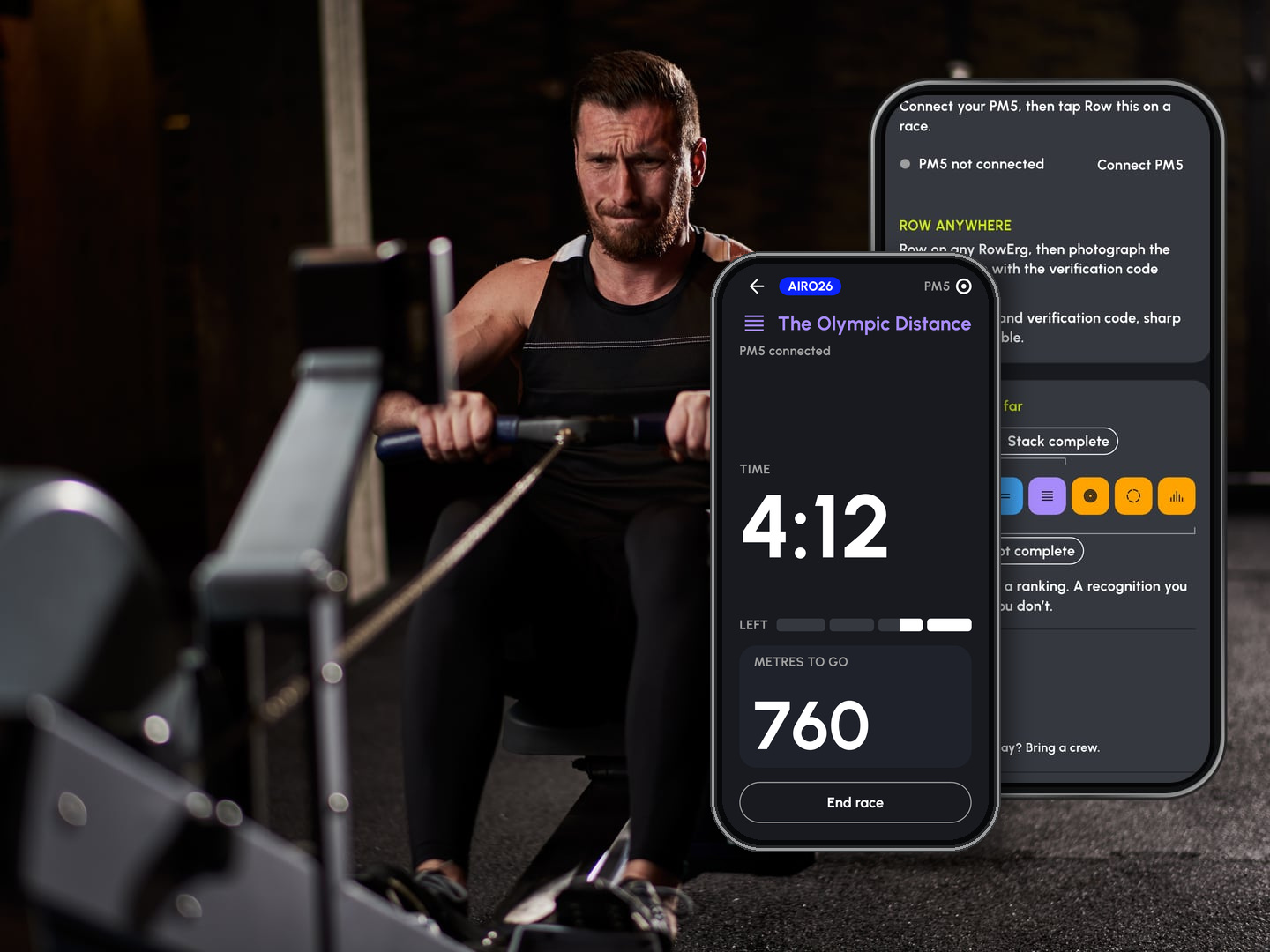
AIRO26: update your app and get ready for 24 October
Get ready for AIRO26 on Saturday 24 October: update the Row Nation app, then read the rules before your first event row.
12 Oct 2026
Nominate your students for the Golden Oar 4x500m RowErg Relay
Every team has one school boy and one school girl, racing 4 x 500 m with Rowing Australia athletes on Saturday 31 October. Nominations close Monday 26 October.